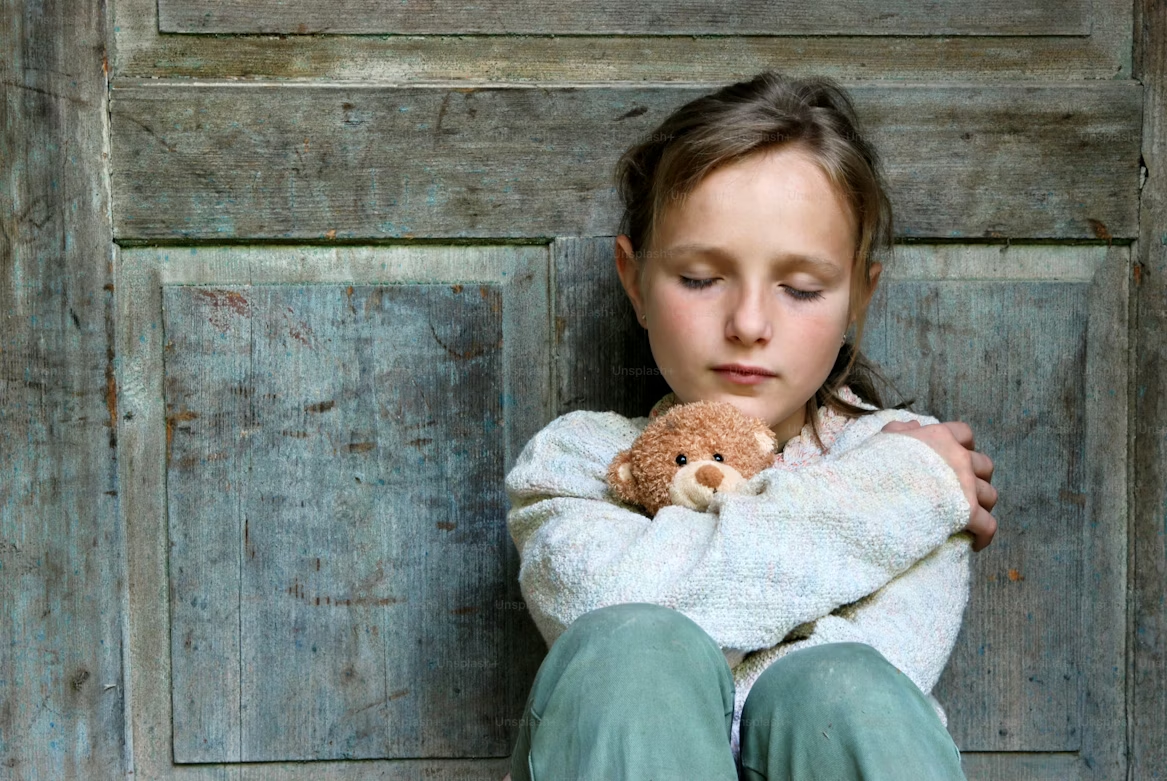
At Prosper Kids, we understand that for many children and teenagers, “finding their voice” isn’t always about a lack of things to say. Often, it is about navigating the internal waves of anxiety that can make speaking up feel overwhelming. Whether it is a primary schooler hesitant to order at a cafe or talk on the phone or a teenager preparing for a school presentation, communication confidence is a skill that can be nurtured with the right support. As clinical psychologists, we take a neuroaffirming approach, recognising that every child’s way of interacting with the world is unique. Rather than trying to change who they are, we focus on building a toolkit of strategies that honour their temperament while empowering them to share their thoughts, build friendships, and tackle challenges with greater ease.
How can I help my child feel more confident speaking in front of others?
Building confidence starts with validating your child’s experience. If a child feels “put on the spot,” their nervous system may enter a fight-or-flight response, making clear communication difficult. You can help by practicing low-pressure communication at home. This might involve “rehearsing” small social interactions, such as ordering at a cafe or asking a librarian for help, in a way that feels like a shared mission rather than a test.
For school-aged children, focusing on the environment can be very helpful. If they are nervous about a specific task, like a “show and tell” or a school speech, try breaking the task into smaller, manageable steps. Start by having them present to their favourite toys, then to a sibling, and eventually to the whole family. This gradual exposure helps the brain learn that while the situation is big, it is also safe.
What is the difference between shyness and social anxiety in children?
It is quite common for parents to wonder if their child is simply shy or if they are experiencing social anxiety. Shyness is generally considered a personality trait or a temperament. A shy child may take a little longer to “warm up” in new social settings but will eventually engage and feel comfortable. They often observe from the sidelines before joining in.
Social anxiety, on the other hand, involves a persistent and intense fear of being judged, embarrassed, or scrutinised by others. This fear can be so significant that it leads to avoidance of school, social gatherings, or even simple greetings. While shyness is a style of relating to the world, social anxiety is an emotional hurdle that can interfere with a child’s ability to do the things they want to do. Understanding this distinction is a key part of the support we provide at our Stirling, Booragoon, and Canning Vale practices.
How can I support my teenager with performance anxiety at school?
Teenagers face a unique set of social pressures as they navigate their identity and peer relationships. Performance anxiety often peaks during high school when oral presentations and group projects become more frequent. To support your teen, move away from the “just do it” approach. Instead, help them understand the physiological symptoms of anxiety, such as a racing heart or shaky hands, as their body’s way of trying to protect them.
Practical strategies can include “scaffolding” the presentation. This might look like talking to the teacher about presenting to a smaller group first or using visual aids that take the “eyes” off the teenager. Encouraging them to focus on the message they want to share, rather than how they are being perceived, can also shift the focus from internal worry to external purpose.
When should I seek professional help for my child’s communication anxiety?
It may be time to seek support from a clinical psychologist if you notice that your child’s anxiety is causing significant distress or preventing them from participating in daily life. This includes persistent school refusal, a complete lack of speech in certain social settings (sometimes referred to as selective mutism), or if their self-esteem is beginning to suffer because they feel they “cannot” speak.
At Prosper Kids, we work with families to develop tailored, neuroaffirming plans that respect the child’s natural personality while giving them the tools to navigate anxiety. Whether you are visiting us in Stirling, Booragoon, or Canning Vale, our goal is to help your child feel heard, understood, and capable.