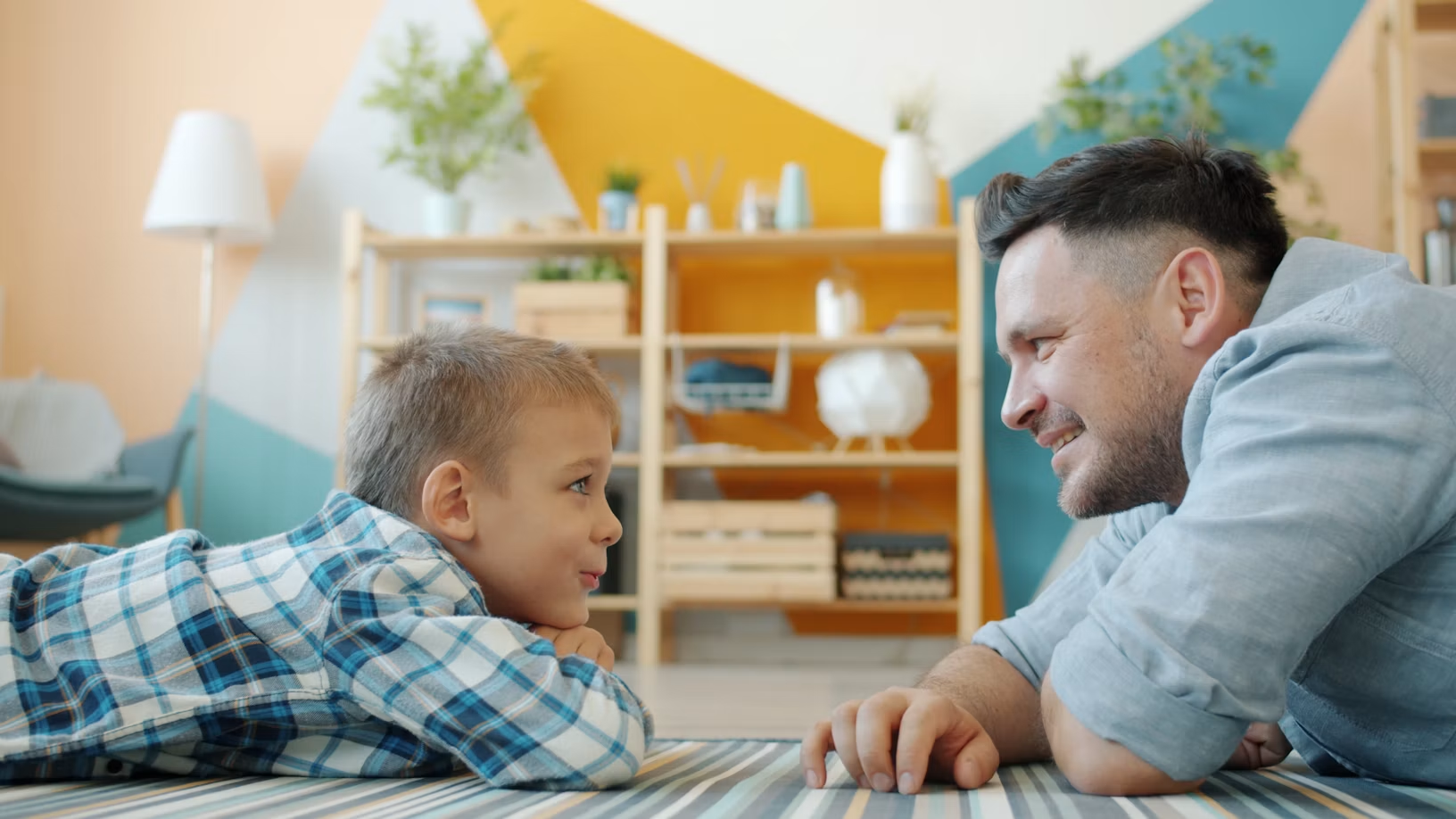
At Prosper Kids, we often talk about the importance of participation rather than just focusing on isolated skills. For a primary school aged child, participation means more than just being present in a room. It is about having the opportunity and the means to engage meaningfully in daily life. Whether it is joining in a game at recess, contributing to a classroom discussion, or ordering a snack at a local cafe in Booragoon, these everyday moments are the building blocks of growth. From a speech pathology perspective, participation is the ultimate goal of therapy. When we focus on how a child communicates in their real world environments, we see a significant shift in their self esteem. This blog explores why participation is the heartbeat of childhood development and how our teams in Booragoon, Canning Vale, and Stirling support families to make it happen.
Shifting the Focus from Skills to Meaningful Engagement
In the field of pediatric therapy, there has been a significant and positive shift toward neuroaffirming practices. This means moving away from a model that only looks at what a child cannot do and instead looking at how a child can take part in the things they enjoy. Historically, therapy might have focused heavily on the mechanics of speech or the specific rules of social interaction. While these skills are important, they are only useful if they lead to participation.
Meaningful engagement occurs when a child feels they have a place in their community. It is the difference between a child being able to say a specific sound in a clinic room and that same child feeling confident enough to tell a joke to a friend at a park in Canning Vale. When we focus on participation, we look at the whole environment. We ask what barriers might be standing in the way of a child joining in. Sometimes these barriers are related to communication, and sometimes they are related to how the environment is set up. By addressing both, we help children move from being observers to being active participants in their own lives.
How Communication Powers Participation in Primary School
For primary school children, the playground and the classroom are the primary arenas for social and academic development. Communication is the tool that allows them to navigate these spaces. It is how they negotiate the rules of a game, share their ideas during a group project, and express their needs to a teacher. When communication is a challenge, participation can feel daunting.
A speech pathologist works to identify the specific communication supports that can make participation easier. This may include working on expressive language so a child can share their thoughts more clearly or supporting receptive language so they can follow complex instructions in a busy classroom. In our clinics in Stirling and beyond, we also focus on social communication in a way that respects a child’s natural way of interacting. By providing children with the tools to connect with others, we open the door to more frequent and more successful participation. This increased engagement provides more opportunities for practice, creating a positive cycle of growth.
The Link Between Participation and Growing Confidence
There is a profound connection between doing and feeling. When children participate in daily activities, they receive feedback from their environment and from the people around them. Successful participation sends a powerful message to a child: I can do this, and I belong here. This builds a sense of agency, which is the belief that they can influence their own world.
Confidence is not something that can be taught in isolation; it is grown through experience. For a child in primary school, confidence might look like raising their hand to answer a question or asking a peer if they can join a game of soccer. Each time a child participates, they are gathering evidence of their own capabilities. Even when things do not go perfectly, the act of participating and navigating a challenge can build resilience. As speech pathologists, we see that when children are supported to engage in ways that are authentic to them, their self worth flourishes. They begin to see themselves as competent communicators and valuable members of their peer groups in Booragoon and the surrounding communities.
How Speech Pathology Supports Participation at Prosper Kids
At Prosper Kids, our approach to speech pathology is designed to bridge the gap between clinical goals and everyday life. We understand that therapy is most effective when it translates into real world outcomes for your child. Our clinicians in Booragoon, Canning Vale, and Stirling work closely with families to identify the specific areas where a child wants to participate more fully.
This support might involve working on specific speech and language goals, but it also involves looking at the bigger picture. We may provide strategies for parents to support communication during home routines or collaborate with schools to ensure the environment is inclusive. By focusing on participation, we ensure that therapy is relevant and impactful. We want every child to have the communication tools they need to grow, learn, and connect with confidence in their everyday lives.
If you would like to learn more about how our speech pathology services can support your child’s participation and growth, you can find more information or book an appointment here: