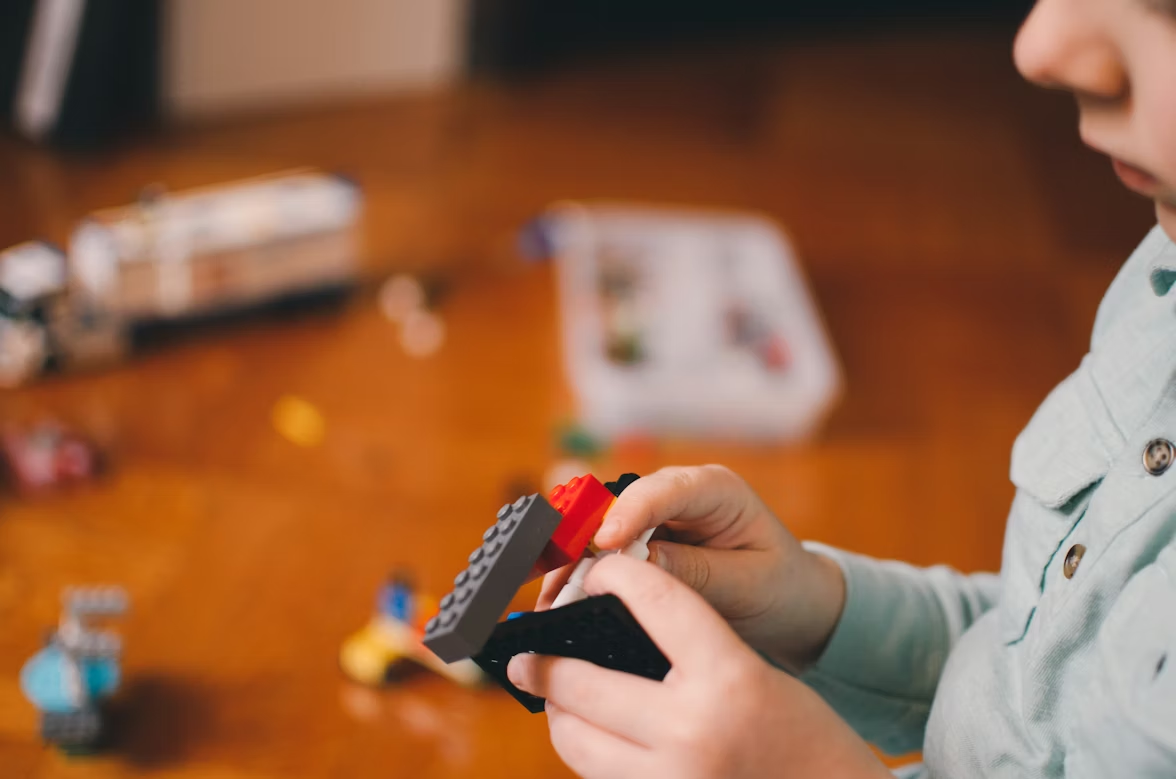
For many proactive parents, play can sometimes feel like another developmental milestone to manage or a “teaching moment” to facilitate. However, the most profound clinical benefits for a child’s mental wellbeing often come from a much simpler approach: following their lead. In the world of child psychology, this is known as responsive play. By shifting from a “director” role to an “observer” and “participant,” parents can strengthen the foundational attachment that underpins all future development. This neuroaffirming approach prioritises the child’s natural interests and pacing, creating a safe space where they feel truly seen and understood. For families visiting our Prosper Kids clinics in Booragoon, Canning Vale, or Stirling, we often find that mastering this shift is a key turning point in supporting a child’s emotional regulation and long-term resilience.
Understanding the Link Between Attachment and Play
At its core, responsive play is an exercise in building secure attachment. When a parent follows a child’s lead, they are sending a powerful neurological signal: “I see you, I am interested in what you care about, and your perspective matters.” This consistent validation creates a “secure base” from which a child feels safe to explore the world.
In child psychology, attachment is not just about affection; it is about the reliability of the adult’s response to the child’s cues. When you join your child in their chosen activity — whether that is lining up cars, repetitive sensory play, or imaginative storytelling — you are aligning your internal state with theirs. This shared experience, often called “joint attention,” is a building block for trust. For parents who may feel anxious about their child’s development, focusing on this connection through play can provide a sense of groundedness. It moves the focus away from “fixing” or “teaching” and toward the simple, powerful act of being present.
How Following Their Lead Supports Emotional Regulation
Emotional regulation is the ability to monitor and manage emotional states. For children, this skill is not innate; it is “co-regulated” through interactions with their primary caregivers. Responsive play provides a low-stakes environment for this co-regulation to occur.
When a child leads the play, they experience a sense of agency and control. This sense of mastery is essential for reducing anxiety. In contrast, when adults take over or direct the play, children may become frustrated or disengaged because the activity no longer matches their internal needs or pace. By being responsive, parents can mirror their child’s emotions and help them navigate small frustrations within the play. This creates a blueprint for the child to eventually manage larger emotions in everyday life. At Prosper Kids, we see that children who feel empowered in their play often develop a stronger capacity to communicate their needs and stay regulated during transitions or challenging moments.
The Neuroaffirming Shift: Valuing Your Child’s Unique Play Style
A neuroaffirming approach to play means moving away from the idea that there is a “correct” way to play with toys. Every child has a unique nervous system, and their play often reflects what their brain needs at that moment. Some children find deep regulation in repetitive movements, while others may prefer quiet, solitary observation before joining in.
Instead of trying to redirect a child toward “functional” play — such as insisting they use a toy exactly as the manufacturer intended — we encourage parents to value the child’s natural interests. If a child is fascinated by the spinning wheels of a car rather than racing it, joining them in that fascination validates their experience. This validation is crucial for a child’s self-esteem and mental health. It tells them that their way of experiencing the world is valid and respected. This shift in perspective can significantly reduce parental anxiety by reframing “different” play as purposeful and meaningful.
Practical Steps for Responsive Interaction at Home
Implementing responsive play does not require special equipment or hours of free time. It is about the quality of the interaction during the time you have available.
Begin by setting aside ten minutes where there are no goals or “teaching” agendas. Sit close to your child and simply observe what they are doing. You can use “narrative praise,” where you softly describe what you see them doing, such as “You’re choosing the blue block now.” This shows you are paying attention without taking over.
Wait for an invitation to join. This might be a look, a gesture, or a direct request. When you do join, try to stay in the “assistant” role. Ask yourself, “How can I support what they are already doing?” If the play feels repetitive, allow it to be. The repetition is often where the child is finding their calm and regulation. For families in Booragoon, Canning Vale, and Stirling, our clinicians are always available to help tailor these strategies to your child’s specific needs.
If you would like to learn more about how to support your child’s development and emotional regulation, you can book an appointment with our team here: https://prosperhealthcollective.com.au/book-now/