When parents ask me about empathy, it’s often because they’re worried their child isn’t showing it in the way they expect. They might notice their child missing social cues, seeming uninterested in others’ feelings, or responding in ways that feel blunt or unexpected.
One of the most important things I like to share is that empathy is not a single skill children either have or don’t have. It develops over time, alongside language, social understanding, and emotional regulation. Children also express empathy in different ways, especially neurodivergent children, and those differences deserve to be understood rather than corrected.
As a speech pathologist, I often return to two powerful and very natural tools when supporting empathy development in children: play and storytelling.
How do children learn empathy?
Empathy grows through connection and communication. Children learn about feelings and perspectives by experiencing them in everyday interactions and by having language modelled around emotions and thoughts.
Some children are very expressive and talk openly about feelings. Others show empathy through actions, such as helping, problem-solving, or staying close to someone who is upset. Neither approach is more “right” than the other.
From a speech pathology perspective, empathy is closely linked to language. Understanding words like think, feel, know, and remember helps children make sense of what is happening inside themselves and others. For children who need more support with language or social communication, empathy may develop differently or take more time, and that’s okay.
Can play help children understand emotions?
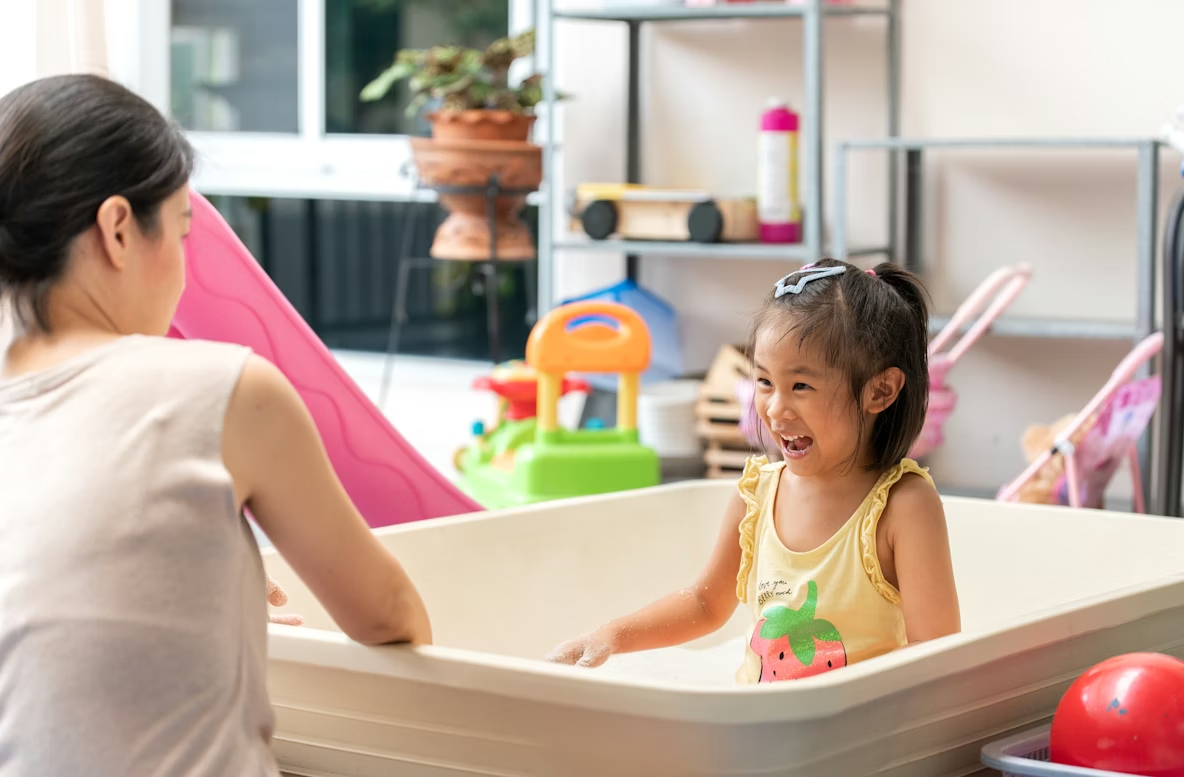
Play creates a space where children can explore emotions without pressure. In play, children are free to experiment, repeat experiences, and make sense of the world in ways that feel safe.
Pretend play can be particularly helpful. When children act out scenarios with toys, figures, or costumes, they are often processing real experiences. Adults don’t need to direct this play. Simply noticing and gently naming emotions can be enough. For example, “It looks like that character is feeling worried” or “That didn’t go how they expected.”
At times children might play or act out scenarios that might seem strange to us as adults, but rest assured this is often normal and their way of processing real-life situations.
Games that involve turn-taking, winning, and losing also offer natural opportunities to talk about emotions as they come up. These moments don’t need fixing or teaching. Sitting alongside your child and acknowledging how something feels can be more supportive than trying to change the behaviour.
It’s also important to remember that not all children enjoy the same types of play. Some prefer structured games or solitary play, and empathy can still be supported within those preferences.
Why is storytelling important for social communication?
Stories help children understand that people have different thoughts, feelings, and experiences. When children listen to stories, they practise stepping into someone else’s perspective, even if only briefly.
Reading together gives parents a chance to pause and wonder aloud about characters. Questions like “What do you think they were feeling?” or “Why do you think they did that?” invite reflection rather than testing for the right answer.
Storytelling also supports narrative skills, which are an important part of social communication. Being able to tell and understand stories helps children explain their experiences and understand others more clearly.
For children who find spoken language challenging, visual stories, picture books, or comics can be just as meaningful and often more accessible.
How parents can use play and stories at home
Supporting empathy doesn’t require extra activities or doing things perfectly. Small moments matter.
You might name emotions as they naturally arise during play or daily routines. You might choose books that show a range of feelings and read them together without rushing. You might gently reflect on everyday situations by wondering about how someone else might have felt.
What matters most is creating a sense of safety and connection. Children are more likely to develop emotional understanding when they feel accepted as they are.
If you’re curious about your child’s social communication or emotional development, a speech pathologist can provide general guidance and support. Prosper Kids works with families in Booragoon, Canning Vale, and Stirling, using a neuroaffirming and strengths-based approach.
To find out more visit https://prosperhealthcollective.com.au/prosper-kids/ or contact our team on 08 6381 0071 to book an appointment.