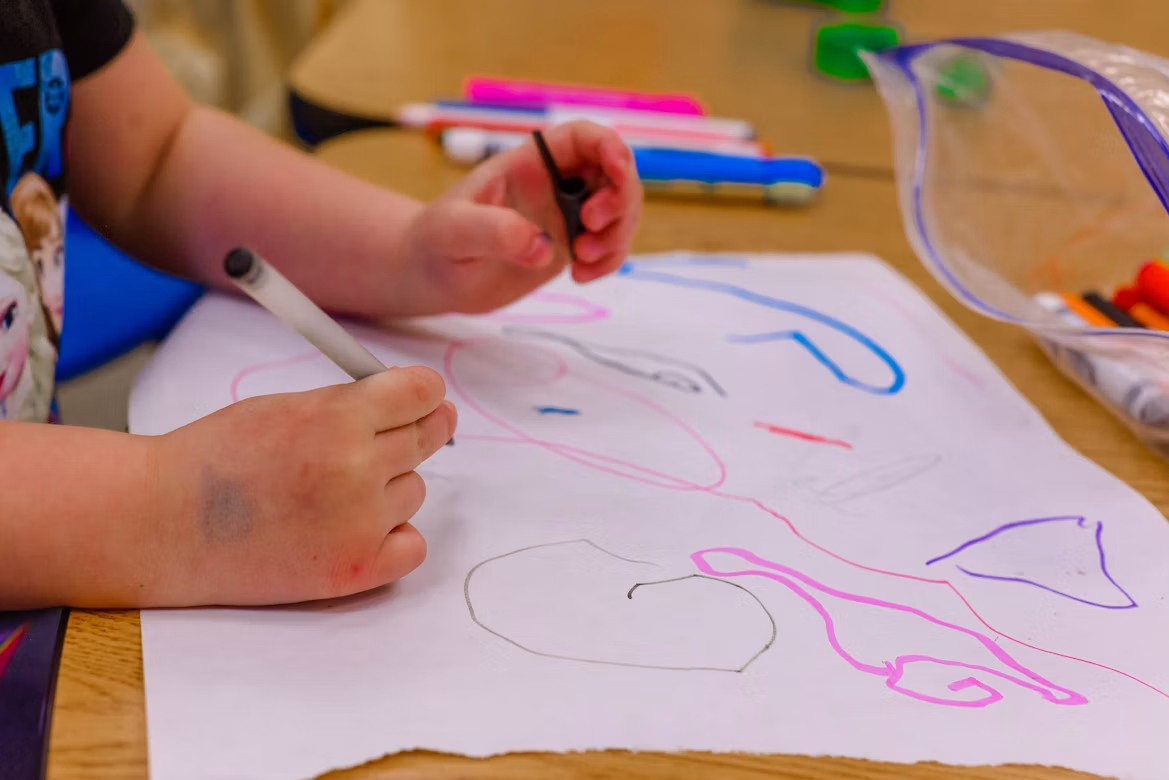
Every year on October 27th, World Occupational Therapy Day celebrates the vital role occupational therapists play in helping people of all ages engage fully in life. When we think about building confidence, resilience, and independence in children, our minds often jump to major achievements—getting an A on a report card, winning a sports trophy, or mastering a complex skill. While these milestones deserve celebration, a child’s core self-worth is actually built in the quiet, repeated routines of daily life.
In pediatric occupational therapy, this concept is known as everyday participation—actively involving children in the normal routines, decisions, and responsibilities of home, school, and community life. On World OT Day, we celebrate the children, families, and therapists who turn these ordinary daily moments into extraordinary wins.
What Is Everyday Participation?
Everyday participation isn’t about adding complicated therapy exercises or extra extracurriculars to an already packed family schedule. Instead, it’s about shifting how we approach the activities that are already happening.
It means moving children from passive observers to active participants:
- In the home: Setting the dinner table, helping measure ingredients, putting away laundry, or caring for a pet.
- In family decision-making: Choosing between two healthy lunch options, deciding which route to take on a walk, or planning a weekend family activity.
- In social settings: Ordering their own meal at a restaurant, saying thank you to a shop assistant, or greeting neighbors.
When children participate in these routine moments, they receive a powerful implicit message: You are a capable, valued member of this community, and your contribution matters.
How Daily Involvement Shapes Child Development
1. Fosters a “Can-Do” Sense of Agency
When a child completes a real task—like spreading butter on toast without tearing the bread or matching clean socks—they gain direct proof of their own competence. This builds self-efficacy, the belief in one’s ability to succeed in specific situations. Over time, a child with strong self-efficacy approaches new challenges with curiosity rather than anxiety.
2. Builds Practical Executive Functioning Skills
Everyday tasks are natural practice grounds for complex cognitive skills. Planning a simple snack involves:
- Sequencing: Getting the plate, fetching the fruit, washing it, and cutting it.
- Working Memory: Remembering where the utensils and towels are stored.
- Problem-Solving: Managing a minor spill without giving up.
These micro-experiences strengthen the brain’s executive function network far more naturally than abstract worksheets or structured games.
3. Teaches Emotional Resilience Through Low-Stakes Setbacks
Dropping an egg while baking or folding a shirt unevenly are minor mishaps with zero serious consequences. Everyday participation provides a safe environment for children to experience small mistakes, manage minor frustrations, and try again. Learning that a spill can simply be cleaned up teaches emotional regulation and normalizes imperfection.
4. Instills Belonging and Shared Responsibility
Children have an innate desire to contribute. When adults handle every detail of daily living for them, children can feel disconnected or overly dependent. Involving them in daily chores and decisions shifts their identity from someone who is simply cared for to an active contributor to the household’s success.
Practical Ways to Promote Everyday Participation
Occupational therapists often remind us that promoting participation requires prioritizing process over perfection:
- Embrace Imperfection: A child-folded towel won’t look like a hotel towel, and that’s completely okay. Resisting the urge to fix their work in front of them protects their sense of pride and ownership.
- Scaffold Tasks: Break complex chores into age-appropriate steps. A toddler can place non-breakable items into lower cabinets; an older child can take charge of preparing one simple meal per week.
- Offer Guided Choice: Instead of open-ended questions that feel overwhelming (“What do you want to wear?”), offer structured choices (“Do you want the blue shirt or the striped shirt?”). This grants autonomy within manageable boundaries.
- Praise Contribution, Not Just Performance: Replace generic praise (“Good job!”) with specific recognition of their effort and impact (“Thank you for setting the table—it helped us get dinner ready much faster tonight!”).
The Ultimate Goal of OT: Empowering Every Child
Building confidence doesn’t require grand gestures or elaborate strategies. This World OT Day, we honor the power of small moments. By creating space for children to step up, help out, and make decisions in daily life, we equip them with the resilience, capability, and self-assurance they need to thrive. We currently have Occupational Therapy appointments available across Perth.